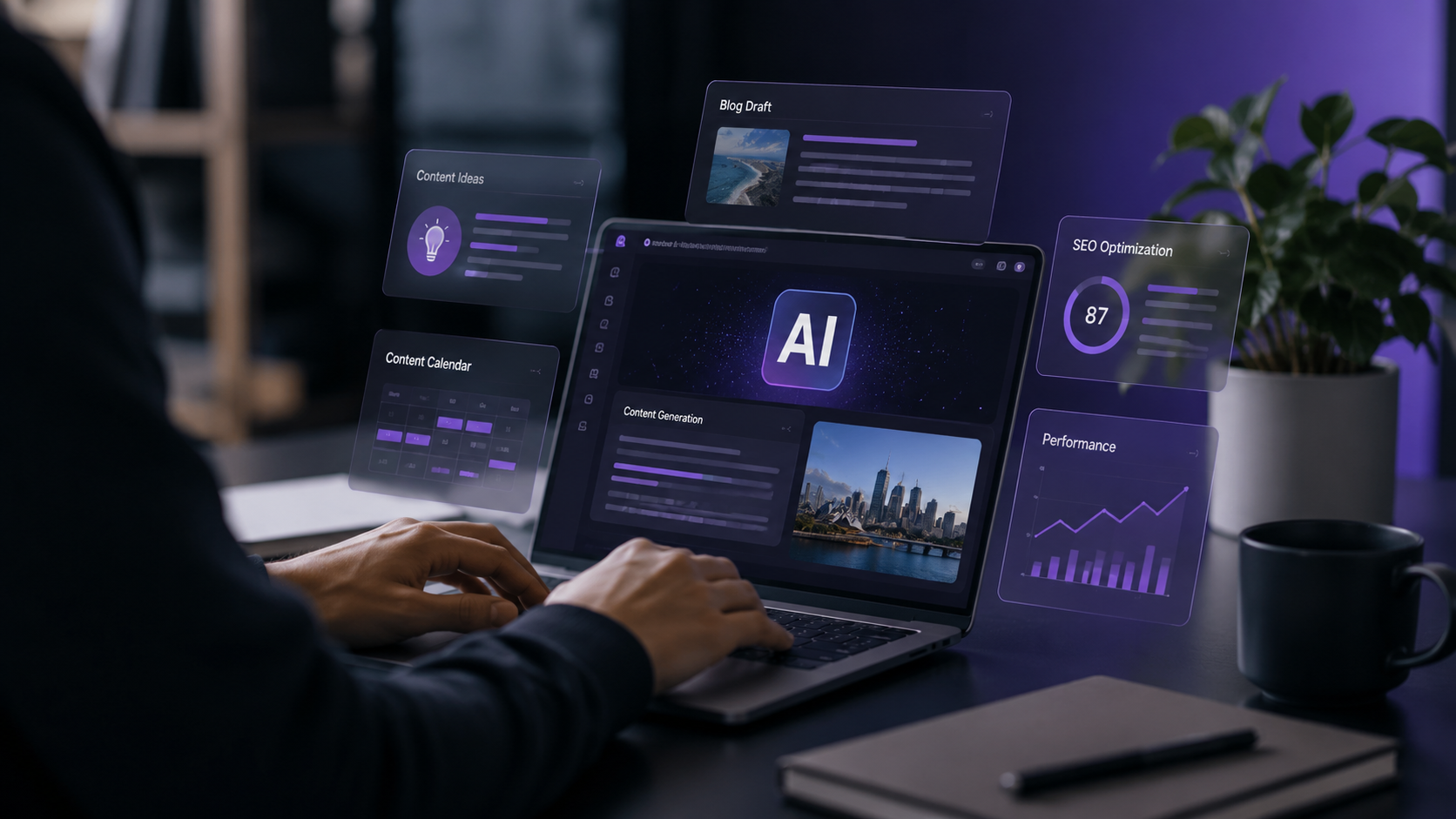
In 2026, AI digital marketing is no longer an experimental add-on; it’s the engine behind customer relevance and scalable growth. Leading brands use AI to deliver hyper-personalised experiences across channels, automate repetitive marketing workflows, and predict customer behaviour with precision. This approach transforms marketing from tactical execution to a strategic capability, paving the way for organisations to take meaningful action and here’s how to join them on this revolutionary ride.
Why AI Now Matters for Digital Marketing Leaders
From Tactical Tools to Strategic Capability
Let’s be real. The days of using AI merely as a fancy automation tool are behind us. Sure, algorithms and chatbots were adorable in their infancy, but today, we’ve stepped into the big leagues. AI has evolved from just helping with mundane tasks to genuinely shaping marketing strategies.
Companies that embrace this shift soon realise a monumental advantage: marketing isn’t merely about throwing ads into the digital void and hoping someone bites. With advanced data analytics and AI capabilities, teams streamline operations and uncover insights hidden in their data troves. The result? More informed decisions, targeted campaigns, and steady growth.
Business Outcomes to Expect
But what’s at stake here? Efficiency, relevance, and, let’s not forget, revenue. AI digital marketing transforms dull, repetitive tasks into automated workflows that free up teams to focus on strategic initiatives. The figures are hard to ignore; studies by McKinsey show companies using AI in marketing improve performance by up to 30% in lead generation and customer engagement. So, are you ready to be the marketing superstar you were meant to be?
Hyper‑Personalisation at Scale: Customer Experiences That Convert
How AI Enables Dynamic Segmentation and Real-Time Content
Now we’re diving straight into the juicy stuff: hyper-personalisation. Forget bland emails that feel like they were written by a robot (hint: they probably were). AI allows brands to deliver tailored experiences that resonate with individual customers on a personal level – a feat unattainable with manual methods.
Imagine a world where each visitor to your website sees a homepage customised to match their past shopping behaviour, preferences, and even seasonal trends. Dynamic segmentation enables this, assigning real-time context to potential customers, like identifying a shopper who spent hours browsing for running shoes versus one who’s all about cocktail dresses.
Use Cases: Personalised Journeys, Product Recommendations, Dynamic Creative
Here’s a classic example: Picture an online retailer that uses AI to analyse past purchasing data and browsing patterns. An AI tool predicts a customer might be interested in the latest fitness tracker based on their love for gym gear. Voilà! A personalised recommendation pops up just as they’re browsing, leading to a seamless shopping experience and, more importantly, a higher chance of purchase.
Or consider a brand that leverages AI to adapt its marketing creatives based on customer engagement. If a specific pattern emerges, say, ads featuring vibrant imagery perform better in the summer, AI can orchestrate campaigns accordingly. Simply put, hyper-personalisation leads to customer journeys designed for conversion and retention.
Automating Marketing Workflows and Creative Operations
Where Automation Delivers the Biggest ROI
Let’s get one thing straight: if your marketing team is still buried in endless to-do lists and manual processes, it’s time for a change. AI marketing automation frees your teams from the mundane and empowers them to innovate. The biggest return on investment (ROI)? Areas like campaign operations and audience activation.
Imagine automating follow-up emails for site visitors who didn’t complete their purchase. With AI, you design a workflow that not only triggers emails but also customises them based on user behaviour. For example, if a customer adds a pair of shoes to their cart but doesn’t check out, an email might offer a limited-time discount. You’re not just throwing spaghetti at the wall; you’re serving a specific dish tailored for the customer.
AI Tools That Accelerate Content Production and Testing
And let’s not forget about content creation. AI tools like GPT models help marketers generate compelling copy at lightning speed. Need five variations for a product description? Done. Searching for social media posts that resonate? Voilà! Plus, these tools can analyse which content performs best, taking the guesswork out of the equation.
Gone are the days of guesswork or, even worse, the “let’s pray and see” strategy. Instead, automated testing tools enable continuous improvement for your campaigns. Before you know it, your marketing strategy morphs into an agile powerhouse capable of responding to market changes in real-time.
Building Scalable, AI-Driven Growth Strategies
Predictive Analytics, Propensity Models, and Lifetime Value Optimisation
Welcome to the future of marketing, where intuition meets precision. AI delivers predictive analytics that suggest what your customers might do next based on historical data. Imagine knowing which customers are likely to churn and switching gears before they do. This level of insight transforms how brands engage with their audience.
You can build propensity models that help predict customer behaviours, from product interests to potential lifetime value. By investing your resources wisely, you nurture your highest potential customers. Planning a campaign based on these insights? You’ll not only recruit the right audience, but you’ll also keep them coming back, which means lower customer acquisition costs (CAC) and higher lifetime value (LTV). What’s not to love?
Continuous Experimentation: Using AI to Run Smarter Tests and Campaigns
Here’s the twist: with AI, experimentation isn’t just a ‘nice to have’; it’s a core strategy. A well-designed AI model can run hundreds of variants simultaneously, crafting ideal customer experiences without overburdening your teams. By rapidly implementing and measuring multiple campaigns, you discover what resonates with your audience faster than ever.
Take the example of an online retailer that leveraged AI for A/B testing different marketing creatives. By testing several visuals and messaging in real time, they identified which combinations led to significant conversion improvements within days instead of weeks. Now that’s quick!
Getting Started: Practical Steps, Governance and Measurement
Minimum Viable Tech Stack and Data Needs
Stepping into AI digital marketing doesn’t require building a spaceship right away. But you will need a solid tech stack. Start with a Customer Data Platform (CDP) for unified customer data management. From there, your architecture should include identity resolution tools, marketing automation platforms, and analytical solutions.
Step one: Evaluate your existing data sources and identify gaps. You need clean and comprehensive data before AI can work its magic.
Ethics, Privacy and Change Management
While all of this sounds great, it’s also essential to consider ethics and customer privacy. We all know the digital world has its dark corners. To mitigate risks, establish robust governance frameworks that promote transparency and compliance with privacy laws. Furthermore, considering the human element, change management will be crucial as you implement any new technology.
Real talk: Ignoring these elements can lead to backlash, breaking the trust you’ve painstakingly built with your customers. Follow best practices, and your AI integration will be smooth sailing.
The Next Step for Future-Proofing Your Digital Marketing
The reality is clear: AI is no longer a lofty ambition; it’s a necessity. In a marketing world that’s as competitive as a toddler’s soccer game, brands must adapt or risk being sidelined.
Are you ready to transform your marketing strategy into an agile, data-driven powerhouse? It’s time to make AI your best ally. Future-proof your digital marketing with AI-powered strategies – partner with a digital marketing expert to make your vision a reality.
Get in touch with us today and kickstart your journey into the AI future.